If you have spent any time researching property in Bengaluru, you've probably had this exact conversation: "Should I go Sarjapur or Bannerghatta Road?"
Both corridors come up constantly. Both have genuine credentials. Both have delivered appreciation to buyers over the past decade. So the question isn't which one is famous — it's which one actually makes more sense for where Bengaluru is headed in 2026 and beyond.
This blog gives you an honest side-by-side. No promotional noise. Just a clear look at what each corridor offers — and what it asks of you in return.
How These Two Corridors Grew Differently
The first thing to understand is that Bannerghatta Road and Sarjapur Road didn't grow the same way. And that origin story shapes everything about how they behave as investment markets today.
Sarjapur Road grew fast and it grew for one reason: IT. When tech parks expanded along the Outer Ring Road and into Whitefield and Electronic City, Sarjapur Road became the logical residential overspill. Developers rushed in, apartment supply shot up, and a large tenant population of young tech professionals created strong rental demand almost overnight. The corridor's fortunes became closely tied to one sector.
Bannerghatta Road's growth was slower, more layered, and ultimately more durable. Residential neighbourhoods came first — JP Nagar, Jayanagar, BTM Layout. Then came the hospitals: Apollo, Fortis, and now Narayana Health's ₹246 crore land acquisition signalling a major expansion. Then the educational institutions — IIM Bangalore, Christ University, National Public School, Dayananda Sagar University. Then large-format retail in Royal Meenakshi Mall, Vega City Mall, and Forum South Bangalore. The corridor didn't depend on a single driver. It accumulated reasons to live here over decades.
That difference matters enormously when you're thinking about a 10 to 15-year investment horizon.
The Numbers: What Price Growth Actually Looks Like
Property price appreciation on Bannerghatta Road has been consistent and compounding. Values have risen approximately 19.4% in the last year, around 46.8% over the past three years, and close to 68.2% over five years. That is not a spike. That is a sustained upward curve driven by organic, end-user demand.
Sarjapur Road has also appreciated — but unevenly. Certain pockets have done well. Others have stalled or corrected, affected by an oversupply of new launches, concentrated traffic congestion, and a heavy dependence on rental demand from IT professionals. When that tenant pool shifts — during layoffs, during remote-work cycles, during sector slowdowns — pockets of Sarjapur Road feel it quickly.
For investors, this distinction matters more than the headline appreciation number. Consistent growth is preferable to boom-and-bust cycles, particularly when you are holding a multi-crore asset for several years.
Social Infrastructure: Where the Gap Is Clearest
Social infrastructure — the hospitals, schools, shops, parks, and daily services that make a neighbourhood actually liveable — is where the two corridors diverge most sharply.
Bannerghatta Road is mature. Apollo Hospital is approximately 4 to 5 kilometres from Godrej Vanantara. Fortis Hospital is within an 8 to 9 kilometre radius. IIM Bangalore — consistently ranked among India's top two management institutions — sits right on the corridor. National Public School, BGS National Public School, Ryan International, and Chrysalis High are all within a comfortable school-bus radius. Three major malls serve the retail and entertainment needs of the corridor's residents. The daily life infrastructure is not "coming soon." It is already there.
Sarjapur Road is still catching up. The corridor built its residential supply faster than its supporting infrastructure. For healthcare, many residents still depend on facilities in Whitefield or along the Outer Ring Road. For premium schooling, families often travel to other parts of the city. For large-format retail, the options within the corridor itself remain limited compared to the residential density it serves. The infrastructure will arrive. But for a buyer evaluating where to commit today, the gap is real.
Connectivity: Daily Travel, Not Just Office Access
Both corridors offer connectivity. But they offer it differently, and that difference affects daily quality of life.
Sarjapur Road connects well to IT employment hubs — Whitefield, Electronic City, Marathahalli, and the Outer Ring Road. For a tech professional whose entire week revolves around office commutes, it is a logical base. But its connectivity is largely one-directional. Moving north, west, or into central Bengaluru for schools, hospitals, or weekend activities often means navigating congested junctions and slow internal roads.
Bannerghatta Road connects in multiple directions. JP Nagar, Jayanagar, BTM Layout, NICE Road, and the Outer Ring Road are all accessible. For families whose daily movements are genuinely multi-directional — school drop-offs, hospital visits, weekend outings, evening shopping — this flexibility is worth more than a single fast route to one employment cluster.
The Namma Metro Pink Line adds the decisive infrastructure layer from May 2026. The elevated section from Kalena Agrahara to Tavarekere, running directly along Bannerghatta Road, gives residents car-free access to JP Nagar in 12 minutes and connects northward toward Nagawara. Sarjapur Road has no confirmed metro connectivity for 2026. It remains primarily car-dependent, which means its liveability score is directly tied to road conditions.
The Investment Profile: What Kind of Buyer Wins Where
Sarjapur Road suits a specific kind of investor: someone comfortable with higher volatility, willing to hold through IT sector cycles, and focused primarily on rental yield from tech-sector tenants. In the right pocket, at the right price point, it can deliver. But it requires active management and a tolerance for tenant turnover.
Bannerghatta Road — and specifically, a project like Godrej Vanantara — suits a broader range of buyers. End-users choosing a long-term family home. Investors seeking stable appreciation driven by genuine residential demand rather than sectoral employment cycles. NRI buyers who want a trusted developer in a well-established neighbourhood without monitoring the market obsessively from abroad. Professionals with ageing parents who need healthcare proximity as a non-negotiable.
The tenant profile on Bannerghatta Road also tends toward longer stays. Families with school-going children typically remain in one property for five to ten years. Medical professionals attached to Apollo or Fortis anchor for similar durations. This kind of stability directly translates to lower vacancy rates and more predictable rental income.
Godrej Vanantara: Where the Corridor's Strengths Concentrate
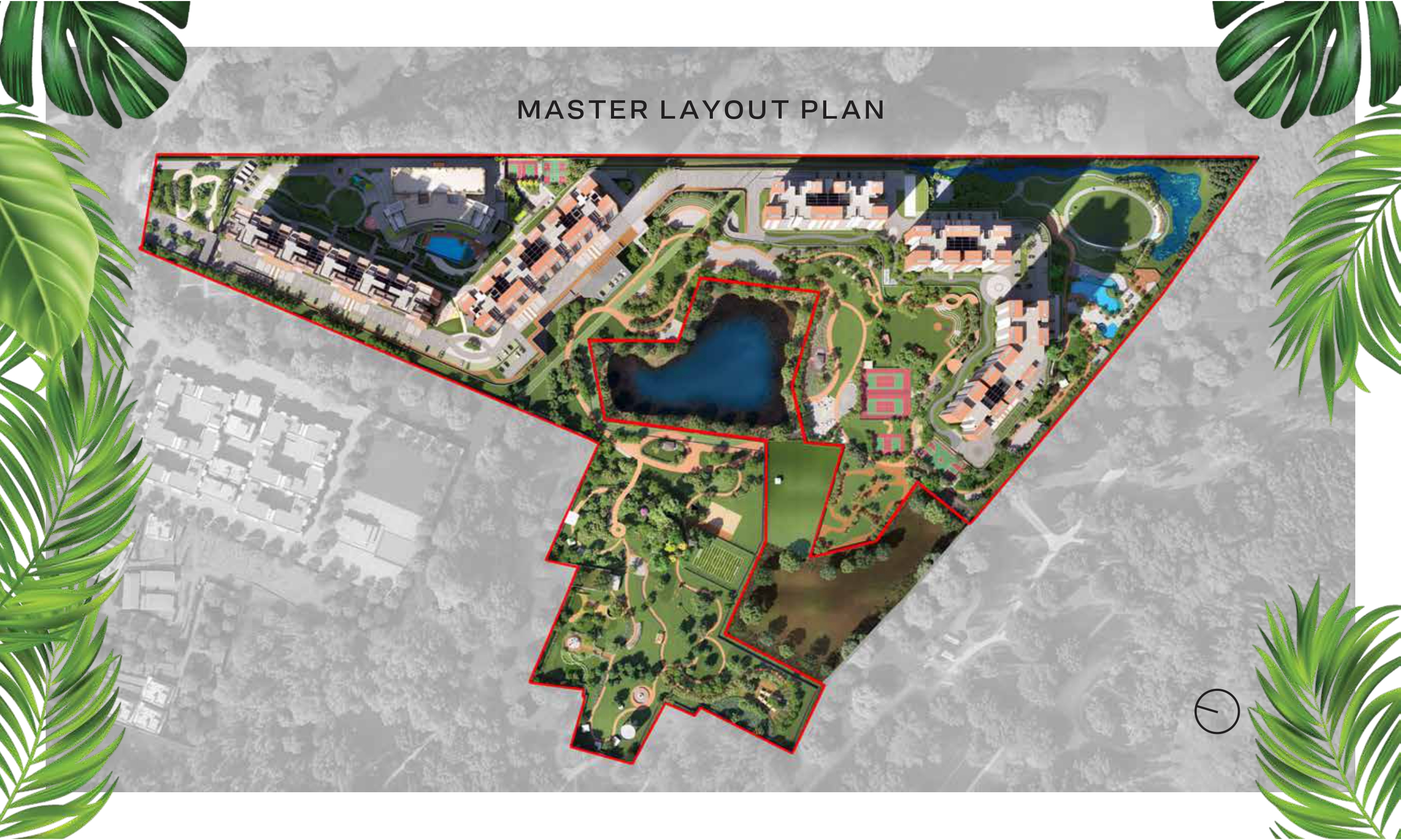
Within Bannerghatta Road, Godrej Vanantara represents the corridor's strongest combination of factors. A 33-acre township from a developer with a documented delivery track record. Approximately 80% open space on campus. A location that sits within the impact zone of the Pink Line Metro, the established healthcare belt, and South Bengaluru's most active education corridor.
The project is currently in its pre-launch phase — which is, historically, the window where entry price and future appreciation potential are most favourably aligned. Once the metro opens in May 2026 and the market prices in the infrastructure upgrade, that entry window narrows.
The Honest Verdict
Sarjapur Road is not a bad investment. It is a different investment — higher risk, higher dependence on IT employment trends, stronger short-term rental demand, but more volatile and less supported by mature daily life infrastructure.
Bannerghatta Road — and Godrej Vanantara within it — is the investment for buyers who want to be right without having to be lucky. It is an established corridor with consistent appreciation, a mature social ecosystem, incoming metro connectivity, and a developer whose name reduces the project-specific risk that always exists in large real estate commitments.
For 2026 and the decade that follows, that is the more durable position to hold.